Walk into any pet supply store and you'll find an entire wall of brushes — slicker brushes, pin brushes, rubber curry combs, deshedding rakes, mat splitters, and everything in between. It's genuinely confusing, especially if your dog has a coat that doesn't fit neatly into one category. Over the years I've worked on everything from dense Malamute undercoats to fine Yorkie silk, and if there's one thing I've learned, it's that the right brush makes an enormous difference — both in how effective the session is and how comfortable your dog feels during it.
This guide is meant to cut through the noise. I'll walk through the main brush types, which coat textures they suit, and some of the most common mistakes pet owners make at home — not to criticize, but because a few small adjustments can make brushing genuinely pleasant for both of you.
Understanding Your Dog's Coat Type First
Before buying a single brush, it helps to understand what kind of coat you're actually working with. Dog coats generally fall into a few broad categories, and most brushes are engineered with one or two of these in mind.
Short, smooth coats (Beagles, Boxers, Dachshunds) lie close to the skin and don't tangle. The goal with these is simply removing loose hair and stimulating the skin.
Medium coats (Golden Retrievers, Border Collies) have some length and can develop tangles around the ears, collar area, and back legs. They shed moderately to heavily depending on the season.
Long, fine coats (Yorkshire Terriers, Maltese, Shih Tzus) can look gorgeous when maintained but mat quickly if neglected. The hair is often silky and prone to breaking if you use too much force.
Double coats (Huskies, German Shepherds, Corgis, Golden Retrievers) have a dense, insulating undercoat beneath a longer outer coat. These are the coats that require the most effort and the most specific tools — particularly during seasonal shedding.
Curly and wavy coats (Poodles, Doodle mixes, Portuguese Water Dogs) don't shed much but mat very easily. They need regular brushing and occasional professional attention to stay manageable.
Wire coats (many terriers) are coarse and rough-textured. They need a specific type of maintenance called hand-stripping to stay true to the breed's look, though many pet owners opt for clipping instead.
The Main Brush Types — What They Do and When to Use Them
Slicker Brushes
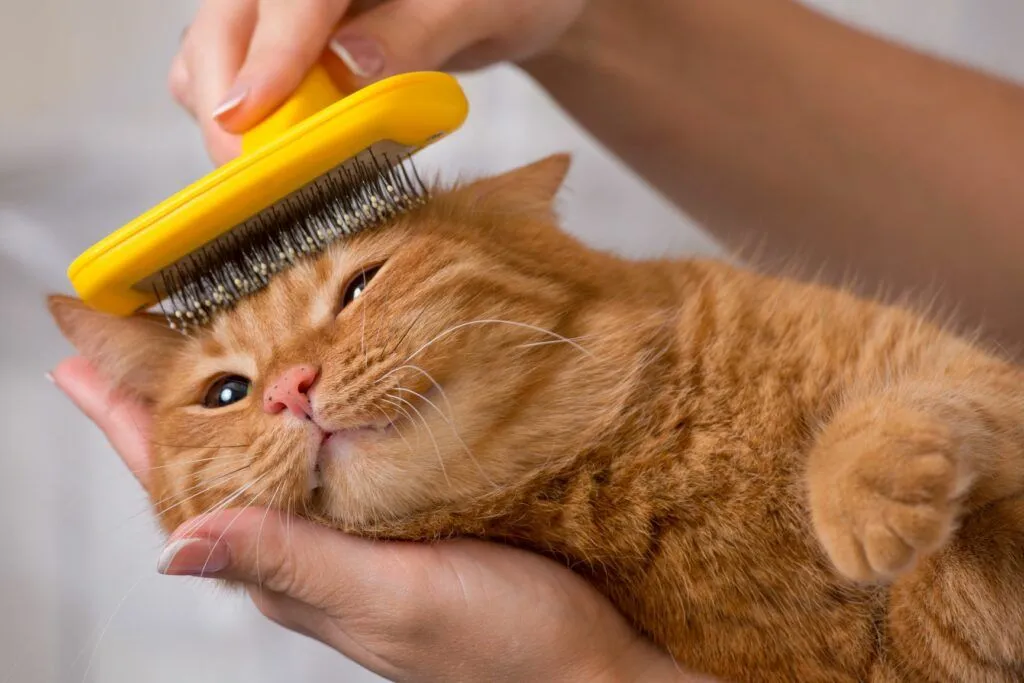
Slicker brushes are probably the most recognisable tool in any grooming kit — that flat or slightly curved pad covered in fine wire pins. They're versatile enough to use on most coat types except very short, smooth fur, where they don't have much to grip.
Slickers are excellent at working through mild tangles, removing loose hair from the surface layer, and smoothing the coat after a bath. The key is using light strokes and not pressing the pins into the skin — the tips should glide through the coat, not scratch. If you're seeing red marks on your dog's skin after brushing, you're pressing too hard.
For long or double-coated dogs, a slicker brush is a starting point, not a complete solution. You'll need other tools to address the undercoat.
"The right brush doesn't just make your dog look better — it makes the whole experience feel safer and calmer for them." — Claire Okafor, Grooming Specialist
Pin Brushes
Pin brushes look like human hairbrushes — a cushioned base with widely spaced, tipped wire pins. They're gentler than slickers and work well on medium to long coats, particularly for dogs whose hair is on the finer side. Many owners use them as a finishing tool after working through any tangles with something more robust.
Pin brushes aren't ideal for heavy shedders because the pins are too widely spaced to pick up loose undercoat effectively. But for daily maintenance brushing on a wavy or long coat, they're comfortable for the dog and easy to use.
Bristle Brushes
These have natural or synthetic bristles and are best suited to short or smooth coats. They don't penetrate deep enough to be useful on thick or long fur, but on dogs like Beagles or Vizslas, they do a nice job of collecting surface hair and distributing the skin's natural oils — which keeps the coat looking healthy and slightly glossy.
Some brushes combine bristle on one side and pin on the other, which makes them handy for dogs with medium-length coats that need a bit of both.
Undercoat Rakes and Deshedding Tools
For double-coated breeds, these are non-negotiable. An undercoat rake has widely spaced, sturdy teeth designed to penetrate the outer coat and pull out the loose fur from the undercoat below. Deshedding tools like the Furminator-style blade go a step further, with a fine-toothed edge that catches even more of that dense, blowing undercoat.
These tools are remarkably effective — genuinely surprising amounts of fur come out — but they need to be used with care. Running a deshedding tool over the same spot too many times can thin the coat unevenly, and using too much pressure near the skin can cause what groomers sometimes call "brush burn." The technique is long, gentle strokes, moving in the direction of hair growth, working section by section.
During the heavy shed seasons (spring and fall for most double-coated breeds), using an undercoat rake regularly at home can significantly reduce how much fur ends up on your furniture — and how much work is needed at your dog's grooming appointments.
Rubber Curry Brushes and Grooming Mitts
These are low-tech and underrated. A rubber curry brush (or grooming mitt you can slip over your hand) uses gentle rubber nubs to massage the skin, loosen dead hair, and stimulate circulation. They're ideal for short-coated dogs and make a great bath-time tool since the rubber grips well against wet fur.
For dogs who are new to grooming or slightly anxious about being brushed, a grooming mitt is often a good starting point — it feels more like a pat than a brushing session, which helps build positive associations with the tool.
Dematting Combs and Mat Splitters
These are problem-solving tools rather than regular grooming tools. If your dog has developed a mat — a dense, tangled knot of hair — a dematting comb or mat splitter can help work through it without cutting away large amounts of coat. The blades or teeth are designed to divide the mat into smaller sections that can then be gently combed out.
A word of caution: if a mat is tight against the skin, it can be pulling the skin uncomfortably even when the dog isn't being touched. Trying to work through severe mats at home can cause real discomfort. In those cases, it's usually kinder to have a professional groom the area — often a close clip to remove the mat entirely is less stressful than an extended dematting session.
Matching Brush to Coat: A Practical Summary
| Coat Type | Primary Tool | Secondary Tool |
|---|---|---|
| Short / Smooth | Rubber curry brush or bristle brush | Grooming mitt |
| Medium length | Slicker brush | Metal comb |
| Long / Silky | Pin brush | Detangling comb |
| Double coat | Undercoat rake + slicker | Deshedding tool (seasonal) |
| Curly / Wavy | Slicker brush | Wide-tooth comb |
| Wire coat | Slicker brush | Metal comb |
The Metal Comb: The Tool People Often Skip
After using a brush, finishing with a metal comb is one of the most valuable habits you can develop. A good metal comb — medium-width teeth on one side, finer teeth on the other — will catch any mats or tangles that the brush glided over. It's the honest test of whether the coat is truly tangle-free.
If the comb snagged somewhere, the brush missed it. Work the comb gently through the area before declaring the session done. For dogs with longer coats, I recommend a thorough comb-through at least once a week, even if you brush more frequently.
Common Brushing Mistakes to Avoid
Only brushing the surface layer
This is the most common mistake, and it's understandable — the surface hair looks smooth, so the brushing feels like it's working. But for dogs with any coat depth, tangles and loose fur accumulate at the base of the coat, close to the skin. Brush in sections, lifting the top layer and working from underneath upward, to actually reach where the problems live.
Skipping the tricky areas
Behind the ears, under the "armpits," around the collar, and where the back legs meet the body — these are the spots where mats form most readily. They're also often the spots dogs are most sensitive about having touched. Regular, gentle brushing of these areas helps dogs get used to it over time, and prevents the mats from building up.
Brushing a dry, matted coat
If the coat is already quite tangled, brushing it dry can be uncomfortable and can cause the tangles to tighten. A light spritz of water or a dog-safe detangling spray can make things move more smoothly. For heavily matted dogs, professional grooming is often the more humane route.
Using too much force
Dogs who dislike being brushed have often had an uncomfortable experience at some point — usually someone pressing too hard or working too fast through a tangle. Keep strokes light and steady, use your free hand to support the area being brushed, and if your dog is showing signs of discomfort (shifting away, tucking, showing the whites of their eyes), slow down or stop and let them settle.
Brushing in the wrong direction
Always brush in the direction of hair growth — from the skin outward. Brushing against the grain is uncomfortable for most dogs and can cause frizzing and breakage in longer coats.
How Often Should You Brush at Home?
The answer depends almost entirely on coat type. Short-coated dogs can get away with once a week, mainly for the bonding experience and a quick once-over. Medium-coated dogs benefit from two to three times a week. Long-haired and double-coated breeds often need daily or near-daily brushing to stay mat-free, particularly during seasonal shedding.
For doodle mixes — which tend to have dense, curly-wavy coats that mat quickly — consistent brushing is genuinely important between grooming appointments. A doodle left unbrushed for a few weeks can develop mats that require a very short clip to remove safely. Many owners are surprised by how quickly the coat changes. A good starting point for most doodles is brushing three to four times a week with a slicker brush and a metal comb.
A Note on Puppies
Getting puppies used to being brushed early makes a lasting difference. Even if your puppy's coat doesn't need much work yet, short, positive brushing sessions — a minute or two, followed by a treat and praise — help them associate the brush with something pleasant. Dogs that are introduced to grooming tools gently as puppies tend to be much calmer throughout their lives, both at home and during professional grooming appointments.
Use something soft like a puppy mitt or a pin brush with rounded tips for young dogs. Keep the sessions short and calm, and stop if they're becoming distressed rather than pushing through. The goal at this stage is building comfort, not perfecting the coat.
When the Right Brush Still Isn't Enough
Regular brushing at home extends the time between grooming appointments and keeps coats healthier overall — but it doesn't replace professional grooming entirely. Even dogs who are well-maintained at home benefit from a thorough professional session periodically, where a groomer can address areas that are hard to reach, trim around the face and paws, clean ears, and do a general wellness check of the skin and coat.
If you're unsure which tools would work best for your specific dog's coat, your groomer is usually happy to make a recommendation. We see a wide range of coats every day, and knowing what brush to suggest for a particular dog's texture and length is genuinely useful to share.
Frequently Asked Questions
A rubber curry brush or a bristle brush works well for short-haired dogs. These remove loose hair and distribute natural oils without scratching the skin. A grooming mitt is another gentle option that many short-coated dogs enjoy.
Yes, slicker brushes can be used on double-coated dogs, but they're best for the outer coat. You'll also want an undercoat rake or deshedding tool to address the dense underlayer, particularly during seasonal shedding when the undercoat blows out heavily.
Frequency depends on coat type. Short-coated dogs may only need brushing once a week, while long-haired and double-coated breeds often benefit from daily or every-other-day brushing to prevent mats. Curly and wavy coats like doodles need three to four times per week at minimum.
Common mistakes include brushing only the surface layer, skipping sensitive areas like behind the ears and under the arms, using too much pressure, and brushing against the direction of hair growth. Always work in sections from the skin outward, and finish with a metal comb to check for any missed tangles.
Both, ideally. A brush-through before the bath helps remove loose fur and work out any surface tangles, which makes bathing more effective. After the bath, once the coat is dry, another session with a slicker brush and comb smooths the coat and catches any remaining loose hair that the bath loosened.