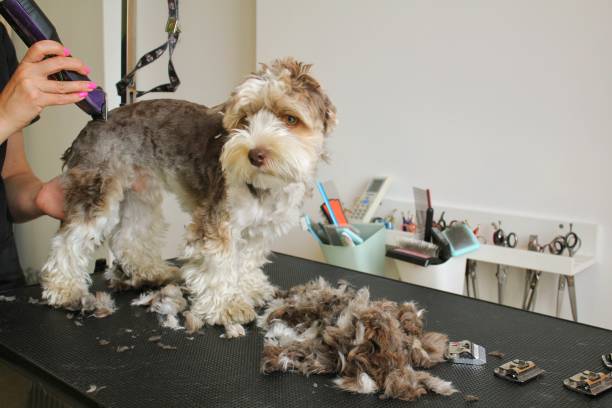
A lot of dogs don't enjoy grooming. That's a normal thing to say out loud, but it sometimes gets lost in the messaging around professional pet care — as though every dog skips cheerfully into the salon and leaves with a wagging tail. The reality for many owners is quite different. Their dog trembles in the car on the way there. Refuses to settle on the table. Comes home stressed and out of sorts for the rest of the day.
If any of that sounds familiar, this article is written for you. We're going to look at what's actually happening with an anxious dog during a grooming session, what you can do at home to help prepare them, and what makes a real difference when you're choosing where to take them.
Why Some Dogs Struggle With Grooming
It helps to understand that grooming involves a cluster of things that dogs are naturally wired to find uncomfortable. Being held in one place by a stranger. Loud dryers and clippers. The smell of unfamiliar animals. Having their feet and face handled. Being on a raised surface where they can't easily escape. None of these are inherently dangerous, but from a dog's perspective, they can feel threatening.
For dogs with a nervous baseline temperament, these experiences stack up quickly. For dogs that had difficult early experiences — particularly rescues, or dogs that weren't handled much as puppies — the stress can be significant. Some dogs become reactive at the groomer even though they're generally well-behaved elsewhere. This makes sense when you understand the context: it's not bad behaviour, it's a stress response.
There's also an element of physical sensitivity. Some dogs have more sensitive skin, are more reactive to touch on certain areas like their paws or belly, or simply find restraint difficult. This isn't something that can be trained away — it has to be worked with.
Reading the Signs of Stress
Before we talk about solutions, it's worth covering what anxious behaviour actually looks like in dogs during grooming — because it's not always what people expect.
The obvious signs: trembling, panting, trying to jump off the table, whining, or growling. These are easy to identify. But there's a whole layer of subtler stress signals that many owners and even some groomers miss:
- Yawning — not sleepiness, but a calming signal that indicates discomfort
- Lip licking — especially when there's no food present
- Whale eye — when you can see the whites of a dog's eyes, often paired with a stiff body
- Freezing — going very still can look like cooperation, but is often a shutdown response to overwhelm
- Turning the head away — actively trying to disengage from what's happening
- Tail tucked or low — even if the dog isn't growling or visibly panicking
A dog showing several of these signals is telling you something, even if they're not barking or biting. The earlier these signals are caught and responded to, the less likely the dog is to escalate to more dramatic stress responses.
"The goal isn't to push a dog through stress — it's to find the point just before they become overwhelmed, and work from there."
What You Can Do at Home
One of the most effective things an owner can do for an anxious groomer is start handling work at home, well before any professional appointment. The goal is to build familiarity and positive associations with the types of touch that happen during grooming.
Handling Exercises
Spend a few minutes each day gently handling the parts of your dog that they find difficult: paws, ears, face, belly, tail base. Keep sessions short and calm. Use treats freely, not as a bribe but as genuine positive reinforcement. The idea is to build a bank of positive associations so that being touched in these areas doesn't immediately trigger wariness.
Don't force this. If your dog pulls their paw away, don't grip tighter — let go, wait for them to relax, and try again more briefly. Dogs respond to pressure and release. Forcing the issue often makes things worse over time.
Getting Familiar With Sounds and Tools
The noise of a dryer is one of the most reliably anxiety-inducing parts of the salon experience. If your dog hasn't been exposed to it from puppyhood, the sound can be genuinely alarming. You can help by playing recordings of grooming tools (dryers, clippers, scissors against a comb) at low volume during calm moments at home — while your dog is eating, resting, or playing. Over time, the sound becomes neutral background noise rather than a signal that something frightening is about to happen.
Brushing regularly at home also helps. A dog that's brushed often is less likely to be sensitive to the sensation, and arrives at the salon in better coat condition — which means the session takes less time and involves less pulling or working through tangles.
The Visit Itself: Setting the Stage
The hours before a grooming appointment matter. A dog that arrives at the salon already stressed — because the car ride was rough, or they haven't had enough exercise, or they sensed their owner's anxiety — starts the experience behind the curve.
A moderate walk before the appointment helps most dogs arrive in a more settled state. Avoid the car if the dog is car-anxious, or take steps to work on that separately. Don't make the morning of the appointment feel different or anxious from your end — dogs pick up on their owners' emotional states remarkably well.
What to Look for in a Groomer
Not all groomers approach anxious dogs the same way. Some are excellent with nervous animals; others have a high-volume business model that simply doesn't leave time for the patience this kind of work requires. Knowing what to look for helps you make a better choice for your dog.
Questions Worth Asking
When you contact a new salon, it's reasonable to ask directly how they handle anxious or nervous dogs. A groomer who takes this seriously will have a clear answer. They'll talk about pacing, reading body language, giving breaks, keeping noise levels lower. A groomer who brushes off the question or says something vague isn't necessarily bad, but it's a yellow flag worth noting.
Ask whether they'll let you come in for a brief meet-and-greet before the first appointment — some groomers encourage this for nervous dogs specifically. If they say yes, that's a genuinely good sign. It means they understand that the dog's relationship with the environment and the person matters, not just whether the groom gets done.
Small vs. Large Salon Environment
Busy, high-volume salons are often louder, more chaotic, and involve more dogs in close proximity. For a nervous dog, this can make an already difficult experience significantly worse. Smaller salons with fewer appointments running simultaneously tend to offer a calmer atmosphere, which can help anxious dogs settle more quickly.
This doesn't mean large salons can't do good work with anxious dogs — individual groomers within any setting can be excellent. But environment does matter, and it's worth visiting or at least describing your dog's anxiety when you call.
The Gradual Introduction Approach
For dogs with significant anxiety around grooming, a gradual introduction is far more effective than trying to get through a full groom on the first visit. The idea is to build positive associations over multiple shorter sessions, each one slightly more involved than the last.
A first visit might involve nothing more than coming into the salon, sniffing around, receiving some treats from the groomer, and leaving. A second visit might include getting on the table and some gentle brushing. A third might involve a bath. By the time a full groom happens, the dog has already had multiple positive (or at least non-negative) experiences in this environment with this person.
This approach takes longer upfront and costs more in time and appointments. But for a dog that's genuinely anxious, it pays dividends — because once a dog trusts the process, visits become manageable for everyone involved, indefinitely.
What Groomers Can Control
A good groomer working with an anxious dog adjusts their own behaviour as much as they adjust their technique. Speaking quietly and calmly throughout. Moving slowly and predictably. Not looming over the dog. Keeping the session shorter and doing full grooms in stages over multiple visits if needed. Recognising when a dog has hit their limit and stopping there.
Products matter too. Strong fragrances in shampoos can be overwhelming for dogs, whose sense of smell is vastly more sensitive than ours. High-heat dryers cause discomfort and can escalate stress. A groomer who takes anxiety seriously will be using tools and products that minimise unnecessary sensory overload.
When Progress Is Slow
Not every anxious dog becomes an easy groomer with time. Some dogs have had formative experiences that make grooming genuinely difficult throughout their lives — and that's okay. The goal isn't necessarily a dog who loves it, but a dog who can get through it without being traumatised by it.
If you've been working consistently on the things described here — handling at home, gradual exposure, choosing the right salon — and your dog is still significantly distressed at grooming appointments, it's worth having a conversation with your veterinarian. Some dogs benefit from mild situational anxiety support in the form of pheromone sprays, calming supplements, or in more significant cases, short-term medication. These aren't solutions in themselves, but they can lower the baseline enough that the gradual work actually has a chance to take hold.
The main thing is to stay patient and to resist the temptation to push through at the cost of the dog's experience. Dogs that are forced to endure things they find frightening don't build resilience — they build deeper fear. Every good experience is a small deposit; every overwhelming one is a withdrawal.
Frequently Asked Questions
Signs include trembling, yawning, lip licking, tucked tail, trying to escape the table, growling, or refusing to stand still. Some dogs shut down completely and go very still — this can look like calm but is often a stress response. Paying attention to subtle body language signals is important.
Many dogs do improve significantly with gradual, positive exposure over multiple visits. The key is not rushing the process and ensuring each visit ends on a neutral or positive note. Some dogs with severe anxiety require additional support — talk to your vet if you're not seeing progress.
Yes, always. A good groomer will adjust their approach, give the appointment more time, and prepare the environment accordingly. The more specific information you can provide — what triggers stress, what helps — the better equipped they'll be.
For some coats, yes — short-coated dogs with minimal grooming needs can often be maintained at home. But for dogs with longer coats that mat or need regular trimming, skipping professional grooming creates its own problems. A patient, gradual approach with the right groomer is generally better than avoidance.
Have a Nervous Dog?
We work regularly with anxious and sensitive dogs at our Gatineau salon. Get in touch to talk through your dog's specific situation — we're happy to discuss what approach might work best for them.
Contact Us